
PDO Threads
PDO threads face lift.
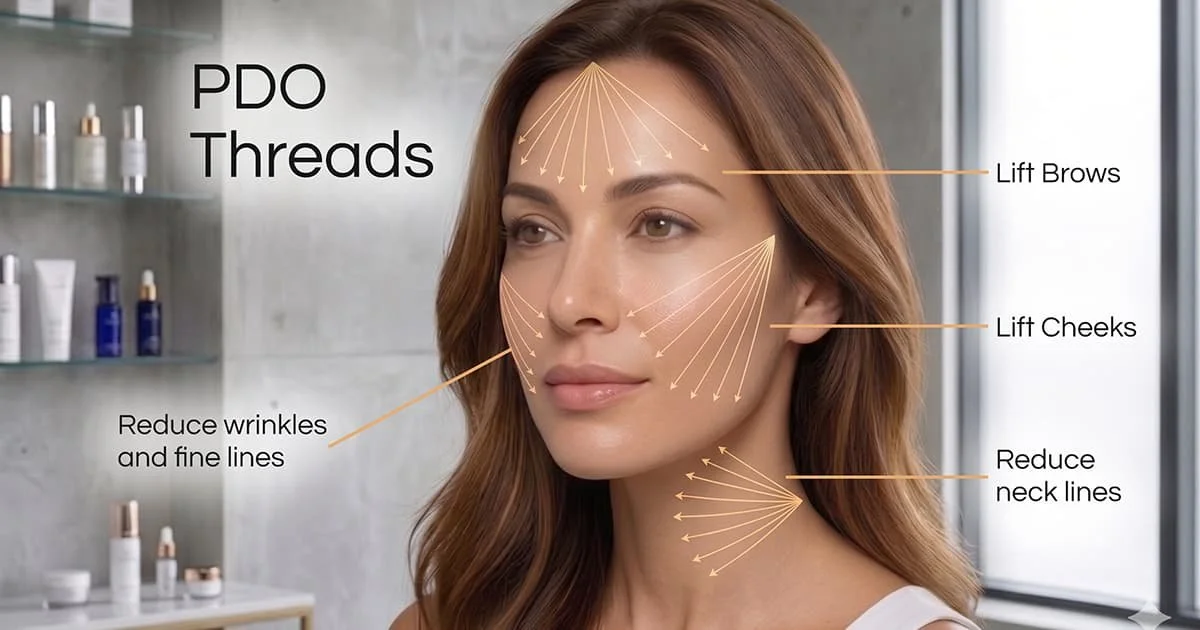
PDO(Polydioxanone) threads is a procedure to place ‘threads’ under facial skin to lift your face up. The procedure is also called a PDO threads facelift. PDO threads are made of PolyDioxanOne which is the same material used by surgeons to close surgical wounds. PDO threads for cosmetics facelift are additionally lined with tiny barbs that catch the skin to pull it up.
The procedure needs to break through the skin, but is considered non-surgical. Threads are introduced through a cut in the skin, called an entry port, for placement. Threads will dissolve in 6-8 months, but the effect of the lifting normally lasts 12 to 18 months before relaxing. Most common areas lifting are the face, jawlines, neck or brows.
A procedure takes about an hour. Entry ports and treated areas will be thoroughly cleaned and numbed with Lidocaine. Depending on the size of threads, and location, the number of threads may vary from 10 to 40 threads. Although there may be immediate results, final results are not visible for up to a month as swelling settles and the body reacts to the internal frame work. . There is typically swelling for 2-4 days. Bruising, however, is not common. Patients may feel discomfort during the procedure but rarely pain. Tylenol is recommended to control any discomfort after treatment.
We recommend “face rest” after a PDO threads facelift. Patients can go back to their normal daily activities within 24 hours, but the first week is important as patients need to pay special attention to the treated area to avoid shifting threads as the body heals around them. Rules are no washing hair (which pulls on the face) for 24 hours, no sleeping on the treated areas, no eating difficult to chew or crunchy food, avoid yawning or stretching your mouth, no excess chewing like with chewing gum.
At Hibiscus we use MINT brand threads because they have three FDA clearances, give the strongest power of pulling and last the longest per research and our experiences. Good result starts to be seen in a month. We follow up with patients closely after the procedure.
Patients who have autoimmune disorders or are taking autoimmune medications are not good candidates for this type of procedure.